
Custom AI Development Sydney: 7-Step Business Guide 2026

67% of Australian businesses that invested in AI in 2025 reported no measurable ROI. Not because AI doesn't work — but because they built the wrong thing, in the wrong order, for the wrong problem.
The difference between the 33% who saw results and everyone else? A structured approach to scoping, building, and deploying AI solutions. After delivering custom AI projects for Sydney businesses across retail, professional services, and e-commerce, we've distilled what works into a 7-step checklist.
Whether you're considering an AI agent for customer service, a workflow automation tool, or a custom chatbot — this guide will help you avoid the expensive mistakes and get to production faster.
Step 1: Define the Problem Before You Pick the Technology
The most expensive AI mistake isn't choosing the wrong model — it's solving the wrong problem. Before writing a single line of code, you need brutal clarity on what you're actually trying to fix.
Questions to answer before anything else:
- What manual process costs you the most time or money right now?
- Can you measure the current cost? (Hours per week, error rate, customer wait time)
- What does "success" look like in 90 days? Be specific — "better customer service" isn't measurable.
A Sydney logistics company came to us wanting "an AI chatbot." After scoping, the real problem was their quoting process — staff spent 3 hours daily on repetitive quote calculations. We built an AI quoting agent instead. Result: quoting time dropped 80%, and the "chatbot" they originally wanted would have solved nothing.
Key takeaways:
- Start with the business problem, not the technology
- Quantify the current cost of the problem in dollars or hours
- "We need AI" is never the right brief — "we need to reduce X by Y%" is
Step 2: Audit Your Data — The Make-or-Break Factor
AI is only as good as the data it learns from. Before committing budget, you need an honest assessment of what you're working with.
Your data readiness checklist:
- ✅ Structured data exists — CRM records, spreadsheets, databases with consistent formatting
- ✅ Sufficient volume — at least 6 months of historical data for pattern recognition
- ✅ Accessible — data isn't locked in paper files or disconnected systems
- ⚠️ Clean enough — some messiness is fine, but major inconsistencies need fixing first
For many Sydney SMBs, the data audit reveals gaps that need filling before AI can add value. That's not a failure — it's saving you from building on a shaky foundation. A 2-week data cleanup now beats a A$20,000 AI project that produces garbage outputs.
Key takeaways:
- No data = no AI. Start collecting structured data now, even if you're not ready to build yet
- Messy data can be cleaned; missing data takes months to accumulate
- A good AI partner will tell you if your data isn't ready — a bad one will build anyway and bill you
Step 3: Choose the Right AI Approach for Your Budget
Not every business needs a custom-trained model. Here's how the options stack up for Sydney businesses in 2026:
Option A: Off-the-shelf AI tools (A$50–500/month)
- Best for: Basic chatbots, email drafting, simple automations
- Examples: ChatGPT Enterprise, Intercom AI, Zapier AI
- Limitation: No customisation, your competitors use the same tools
Option B: Custom AI agents with RAG (A$5,000–20,000)
- Best for: Customer service bots trained on your knowledge base, internal tools, quoting systems
- How it works: Large language models + your proprietary data via retrieval-augmented generation
- Advantage: Answers are grounded in YOUR data, not generic internet knowledge
Option C: Fully custom AI systems (A$20,000+)
- Best for: Complex workflows, multi-system integrations, industry-specific solutions
- Examples: Autonomous agents that handle end-to-end processes, predictive analytics pipelines
- Requires: Clear ROI case — this level of investment needs to save or generate significantly more
Most Sydney businesses we work with land in Option B. It's the sweet spot — custom enough to create a competitive advantage, affordable enough to see ROI within 3-6 months.
Key takeaways:
- Start with Option A if you're just exploring; graduate to B when you need a competitive edge
- RAG-based AI agents (Option B) give you 80% of custom AI value at 20% of the cost
- Only go to Option C when the ROI math clearly supports it
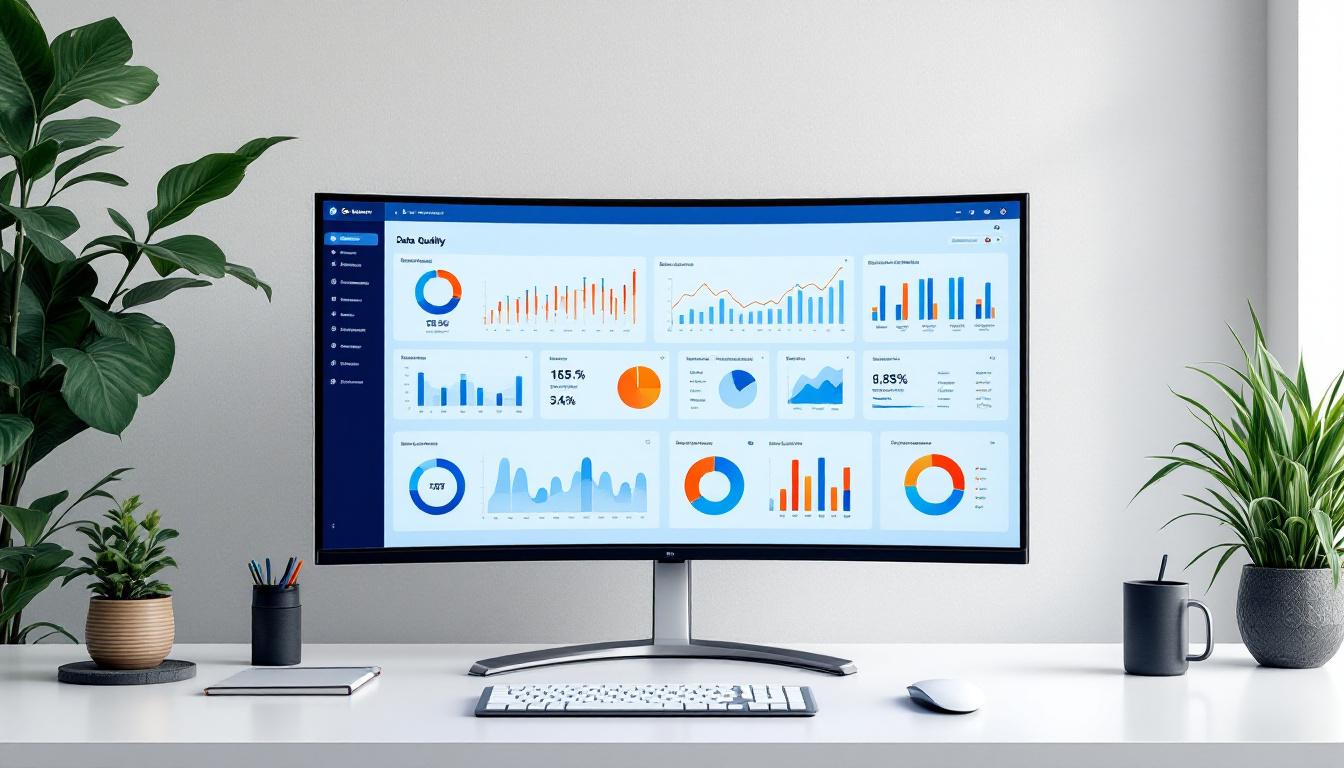
Step 4: Find the Right AI Development Partner in Sydney
The AI development market in Australia is flooded with agencies that repackaged their web dev team as "AI experts" overnight. Here's how to separate the real from the fake:
Green flags:
- They ask about your business problem before discussing technology
- They can show you working AI products they use internally (not just client demos)
- They offer a paid discovery/POC phase before committing to a full build
- They're transparent about what AI can't do for your specific case
Red flags:
- "We can build anything" — real AI developers know the limitations
- No POC or prototype phase — they want full commitment upfront
- They can't explain how the AI will be maintained after launch
- Fixed-price quotes without discovery — every AI project has unknowns
At HornTech, we run AI agents in our own operations daily — our AI development service is built on the same technology stack we depend on ourselves. We offer a 2-week POC phase (from A$2,000) so you can see real results before committing to a full build.
Key takeaways:
- Ask potential partners: "What AI do you use in your own business?"
- Always start with a paid POC — free consultations don't test real capability
- The best AI partner will sometimes tell you NOT to build custom AI
Not sure if custom AI is right for your business? We offer a free 30-minute discovery call to assess your use case and data readiness. Book your AI discovery call →
Step 5: Build the POC — Prove It Works Before You Scale
A proof of concept should take 2-4 weeks and cost A$2,000–5,000. If anyone quotes you more for a POC, they're building a full product and calling it a prototype.
What a good POC delivers:
- A working prototype that handles 3-5 real scenarios from your business
- Measured accuracy rate (aim for 85%+ on your specific use cases)
- Clear documentation of limitations and edge cases
- A realistic estimate for production build cost and timeline
POC success criteria to set upfront:
- "The AI correctly handles X% of customer enquiries without human intervention"
- "Processing time drops from X minutes to Y seconds"
- "Staff spend less than X hours per week on manual corrections"
If the POC doesn't hit your success criteria, you've spent A$2,000-5,000 to avoid a A$20,000+ mistake. That's a win.
Key takeaways:
- POC = 2-4 weeks, A$2,000-5,000. Anything more is a full build in disguise
- Define success criteria before the POC starts, not after
- A failed POC is cheap education — a failed production build is expensive regret

Step 6: Production Deployment — The Details That Matter
The gap between a working prototype and a production system is where most AI projects die. Here's what separates a demo from a real business tool:
Production readiness checklist:
- ✅ Guardrails — The AI knows when to say "I don't know" and escalate to a human
- ✅ Monitoring — You can see what the AI is doing, what it's getting wrong, and how often
- ✅ Data privacy — Customer data is handled in compliance with Australian Privacy Principles
- ✅ Fallback — If the AI goes down, your business process doesn't stop completely
- ✅ Update pipeline — New knowledge can be added without rebuilding the entire system
For Australian businesses, data privacy is non-negotiable. Your AI system should process data within Australian or at minimum APAC regions, and you need clear documentation of what data the AI accesses, stores, and learns from.
Key takeaways:
- A production AI system needs monitoring, guardrails, and a human escalation path
- Australian Privacy Principles apply to AI — make sure your partner knows this
- Plan for maintenance from day one — AI isn't "set and forget"
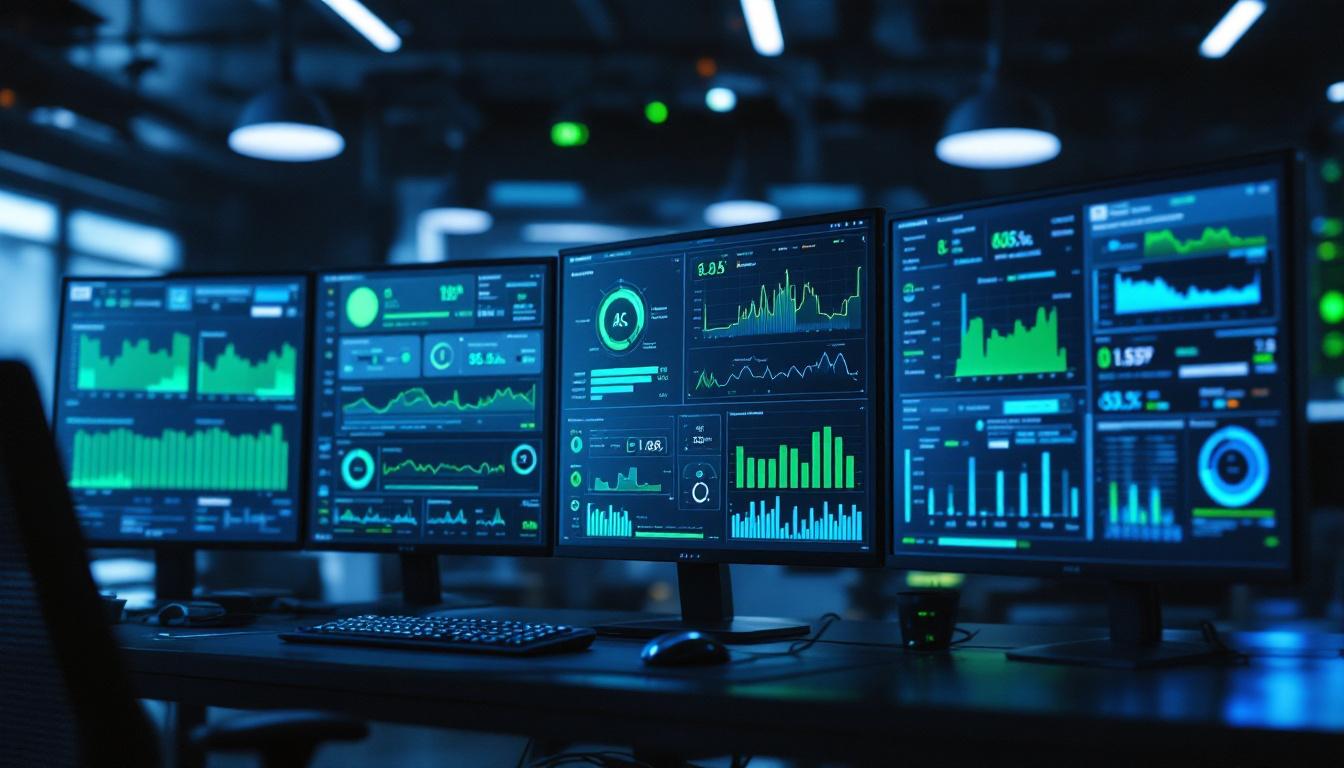
Step 7: Measure, Iterate, and Scale What Works
The first version of your AI will not be perfect. That's expected. What matters is having a measurement framework to improve it systematically.
Monthly metrics to track:
- Automation rate — % of tasks handled without human intervention
- Accuracy — % of AI outputs that are correct/useful
- Time saved — hours reclaimed per week compared to the manual process
- Customer satisfaction — NPS or CSAT for AI-assisted interactions
- ROI — cost of AI system vs. value generated (savings + revenue)
Most custom AI projects reach positive ROI within 3-6 months if scoped correctly. If you're not seeing measurable improvement by month 3, something in steps 1-3 went wrong — and it's cheaper to fix the scope than to keep building.
Key takeaways:
- Track 5 metrics monthly: automation rate, accuracy, time saved, satisfaction, ROI
- Expect 3-6 months to positive ROI on a well-scoped project
- The best AI systems get better over time with feedback — budget for ongoing iteration
Ready to Build AI That Works?
The window for competitive advantage with custom AI is closing fast. Off-the-shelf tools are getting better, which means the bar for "custom" keeps rising. Sydney businesses that start building now will have 12-18 months of compounding advantage over those still evaluating.
We offer a no-commitment 2-week AI POC starting from A$2,000. You get a working prototype, measured against your success criteria, before committing to a full build. Book your AI discovery session →
FAQ
How much does custom AI development cost in Sydney?
RAG-based AI agents (chatbots trained on your data) start from A$5,000. Fully custom AI systems with multi-system integrations range from A$20,000-50,000+. We always start with a A$2,000-5,000 POC to prove value before committing to a full build.
How long does it take to build a custom AI solution?
POC: 2-4 weeks. Production MVP: 6-10 weeks. Full deployment with integrations: 3-4 months. Timeline depends heavily on data readiness and integration complexity.
Do I need technical staff to maintain a custom AI system?
No. A well-built AI system should be maintainable by non-technical staff for day-to-day operations (adding knowledge, reviewing outputs). Your development partner should handle model updates and technical maintenance.
What's the difference between ChatGPT and a custom AI agent?
ChatGPT is a general-purpose tool trained on internet data. A custom AI agent is trained on YOUR data — your products, pricing, policies, and processes. It answers questions about your business accurately because it only references your knowledge base, not the entire internet.
Is my business data safe with custom AI?
With RAG architecture, your data stays in your own infrastructure. The AI retrieves information from your knowledge base at query time — it doesn't send your data to external training sets. Ask your AI partner for a data flow diagram before starting any project.
Related HornTech services: AI Development Services
Keep reading: Inside a $180K Custom AI Build: How a Sydney Logistics Firm Cut Ops Headcount 30% in 2026 · AI for Sydney SMEs in 2026: 14 Questions Every Owner Asks Before Spending a Dollar